AI Voice Agents for Small Businesses: How They Work, What They Cost
By TechVerge Solutions · Updated October 2026 · 9 min read
Short answer: An AI voice agent is software that answers or makes phone calls and holds a natural spoken conversation. It can answer questions, book appointments, qualify leads and pass hard cases to a person. In 2026, most small businesses pay roughly $0.07 to $0.30 per minute of call time in usage fees, plus any setup and monthly platform charges, depending on the platform and how it is built.
Key takeaways
- AI voice agents work around the clock, so after-hours and busy-time calls stop going to voicemail.
- Real cost is more than the advertised per-minute rate. Voice, language model and phone service are often billed separately.
- The best first uses are answering calls, booking appointments and fast lead follow-up.
- US rules matter. AI voices on outbound calls fall under the TCPA, and recording and disclosure laws vary by state.
- Start small with one call type, measure results, then expand.
What is an AI voice agent?
An AI voice agent is a phone-capable assistant powered by speech recognition, a large language model and natural-sounding speech. Unlike an old phone menu (“press 1 for sales”), it understands normal sentences, asks follow-up questions and completes tasks, such as putting a job on your calendar.
For a small business, it works like a receptionist that never takes a break: it picks up on the first ring, follows your rules and writes down every call.
How do AI voice agents work?
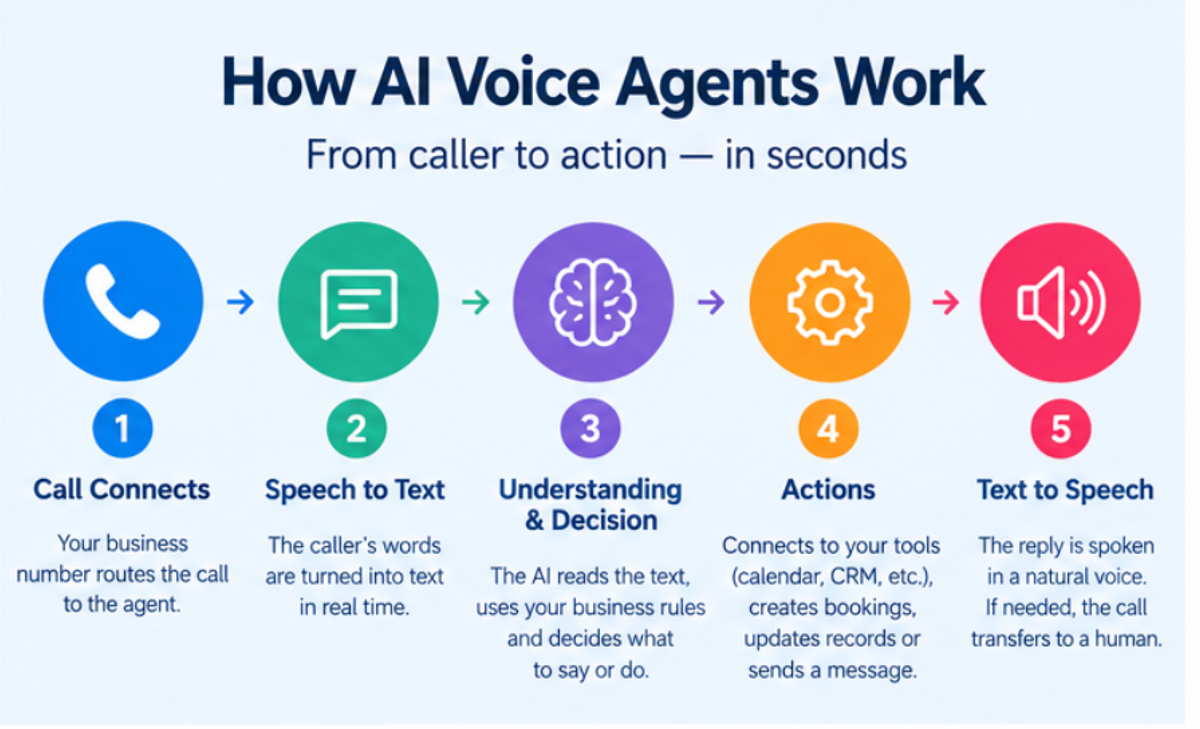
A typical call moves through five steps in under a second or two per turn:
- The call connects. A business phone number routes the call to the agent through a telephony provider.
- Speech to text. The caller’s words are turned into text in real time.
- Understanding and decision. A language model reads the text, uses your business instructions (services, hours, prices, policies) and decides what to say or do.
- Actions. The agent connects to your tools to check a calendar, create a booking, update your CRM, send a text confirmation or alert your team.
- Text to speech. The reply is spoken back in a natural voice. If the caller asks for a person, or the agent is unsure, the call transfers to a human with a summary. Speed matters. Delays of more than a second make a conversation feel awkward, which is why platforms advertise response times and why setup quality affects results.
What can an AI voice agent do for a small business?
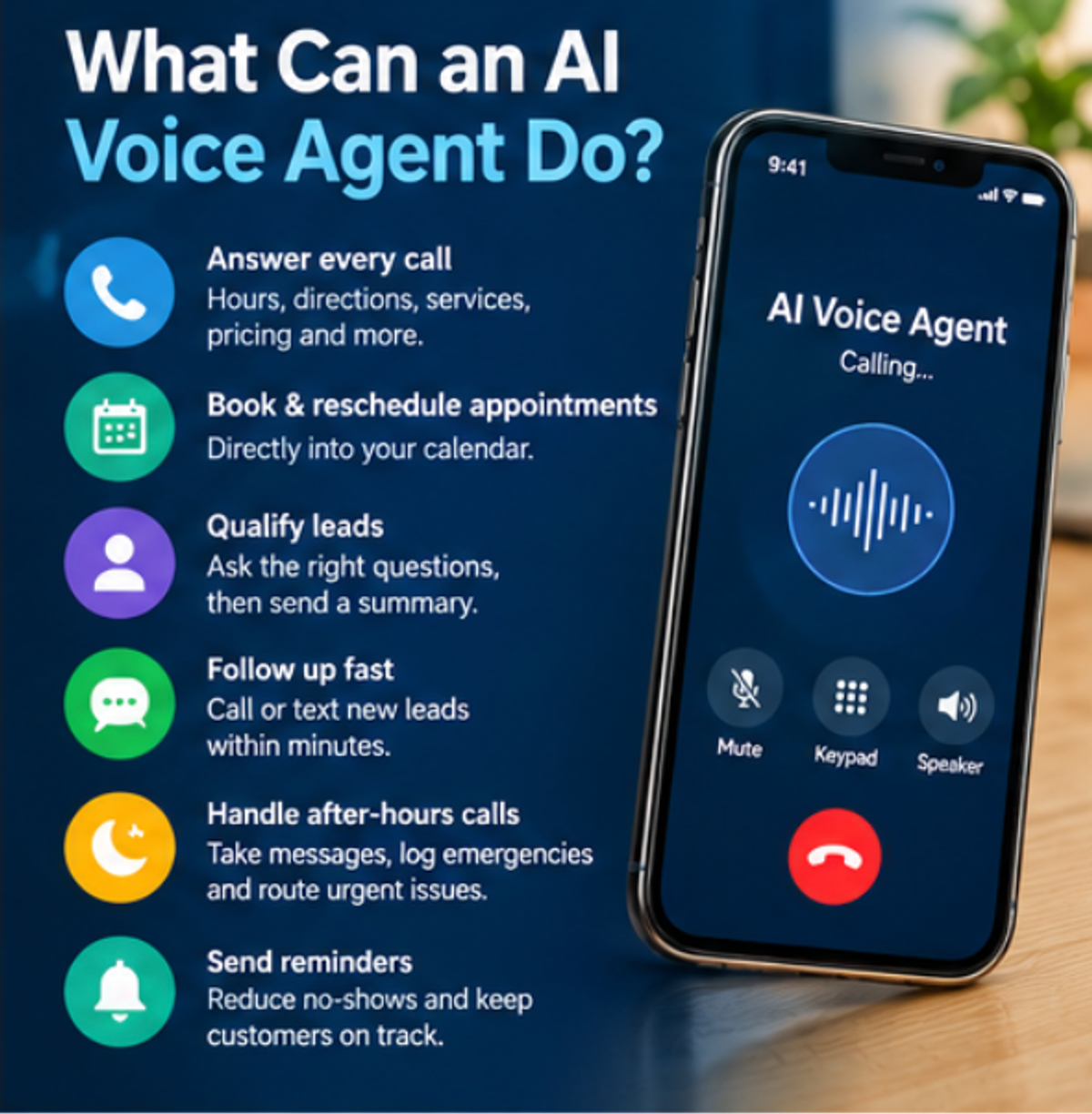
- Answer every call: hours, directions, services, pricing ranges and common questions.
- Book and reschedule appointments: straight into your calendar or scheduling software.
- Qualify leads: ask the questions you would ask, then send a clean summary to your team.
- Follow up fast: call or text new web form leads within minutes, where you have the proper consent.
- Handle after-hours calls: take messages, log emergencies and route urgent issues.
- Send reminders: reduce no-shows for appointments. Common fits include home services (plumbing, HVAC, electrical), dental and medical offices, law firms, real estate teams, salons and clinics, and local restaurants.
US compliance: what small businesses should know
This is general information, not legal advice. Check with a qualified attorney before launch.
- TCPA and outbound calls. In February 2024 the FCC ruled that AI-generated voices count as an artificial voice under the Telephone Consumer Protection Act. In practice, outbound calls or texts using an AI voice generally need the recipient’s prior express consent, and marketing calls need prior express written consent. Inbound call answering is a different situation from outbound calling, but outbound follow-up campaigns need careful consent records.
- Call recording laws. States differ. Some, such as California and Florida, require consent from everyone on the call. Add a clear recording notice.
- AI disclosure. A growing number of states and platforms expect you to say you are an AI. Best practice is to disclose at the start of the call.
- Industry rules. Healthcare practices may need HIPAA-ready tools and a signed business associate agreement. Financial and legal businesses have their own privacy duties.
- Opt-out and do-not-call. Honor opt-out requests quickly and keep records.
How to get started in six steps
- Audit your calls. Review a few weeks of call logs: when you miss calls, what callers ask and which calls make money.
- Pick one job. Start with a single use case, such as after-hours answering or appointment booking.
- Write the rules. Document hours, services, price guidance, booking rules and what must go to a human.
- Connect your tools. Link the calendar, CRM and text confirmations so the agent can complete tasks, not just take messages.
- Test hard. Make test calls with accents, background noise, interruptions and tricky questions. Review transcripts.
- Launch, monitor and improve. Review call summaries weekly, fix gaps and widen the scope once results are steady.
Common mistakes to avoid
- Judging cost by the headline per-minute rate alone.
- Launching without a clear handoff to a human.
- Letting the agent guess about prices, medical, legal or safety questions.
- Skipping test calls and transcript reviews.
- Ignoring consent and disclosure rules for outbound calls.
- Trying to automate every call type on day one.
How TechVerge Solutions builds AI voice agents
We design AI voice agents around your actual workflow, then connect them to the rest of your business automation so a call becomes a booking, a CRM record and a follow-up without manual work. See our AI voice agents service, our wider AI automation and business automation services, and our portfolio.
[Add one real client example with a measurable result here, for example calls answered, bookings added or hours saved. This is the strongest trust signal for both readers and AI search tools.]
Conclusion
AI voice agents give small businesses a way to answer every call, book more jobs and respond to leads quickly without hiring around the clock. The best results come from starting with one clear use case, understanding the full cost beyond the per-minute rate, and respecting US consent and disclosure rules. Ready to see what this could look like for your business? Book a free consultation.
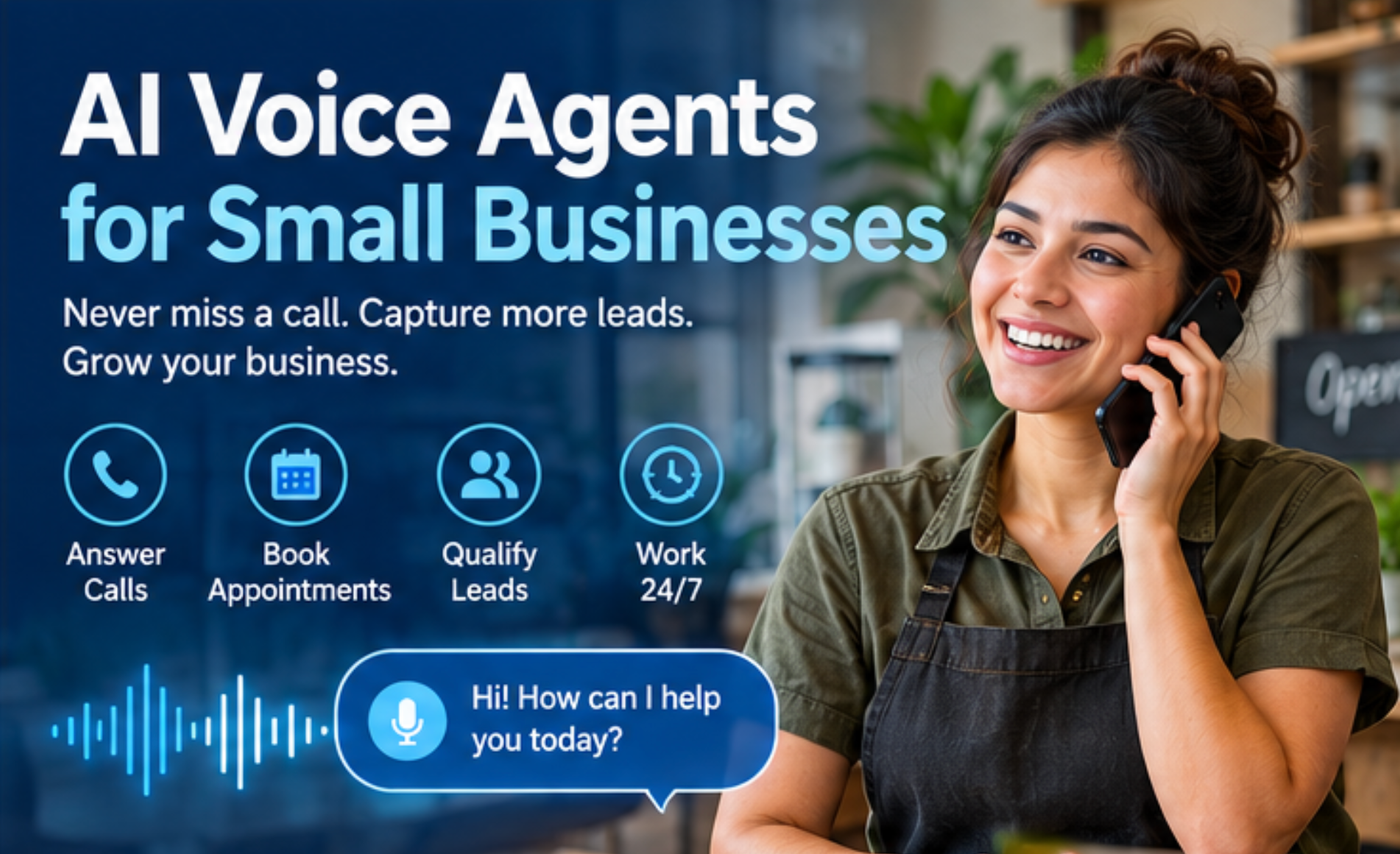
A smiling woman using a smartphone while working in a small business, promoting AI voice agents that answer calls, book appointments, qualify leads, and provide 24/7 customer support.